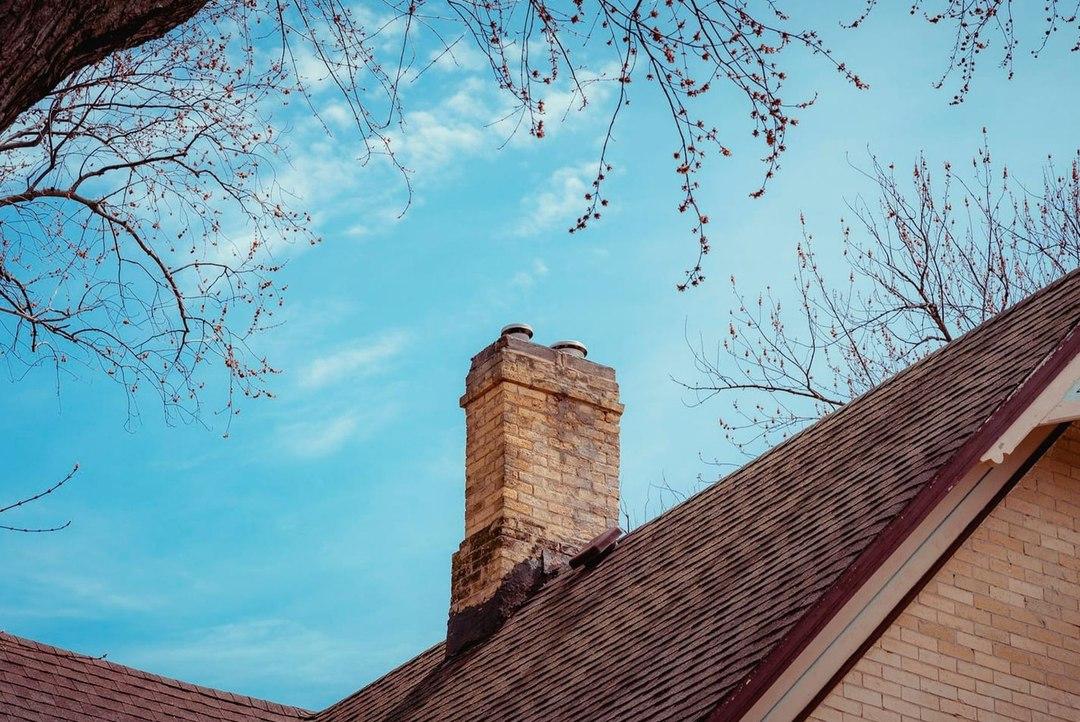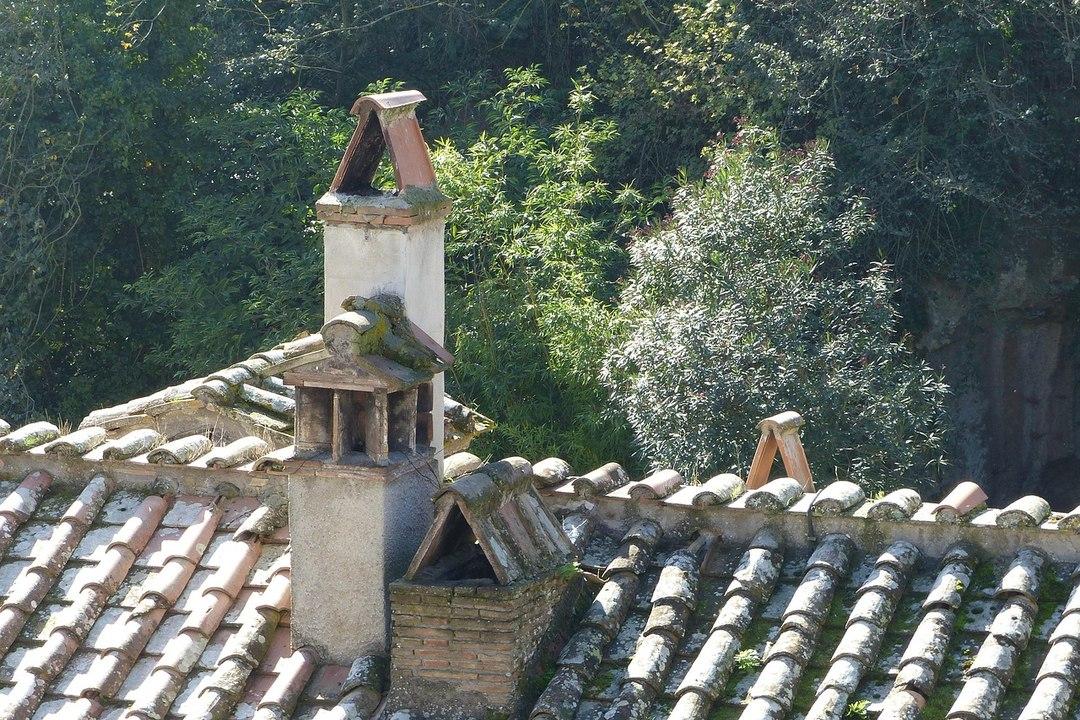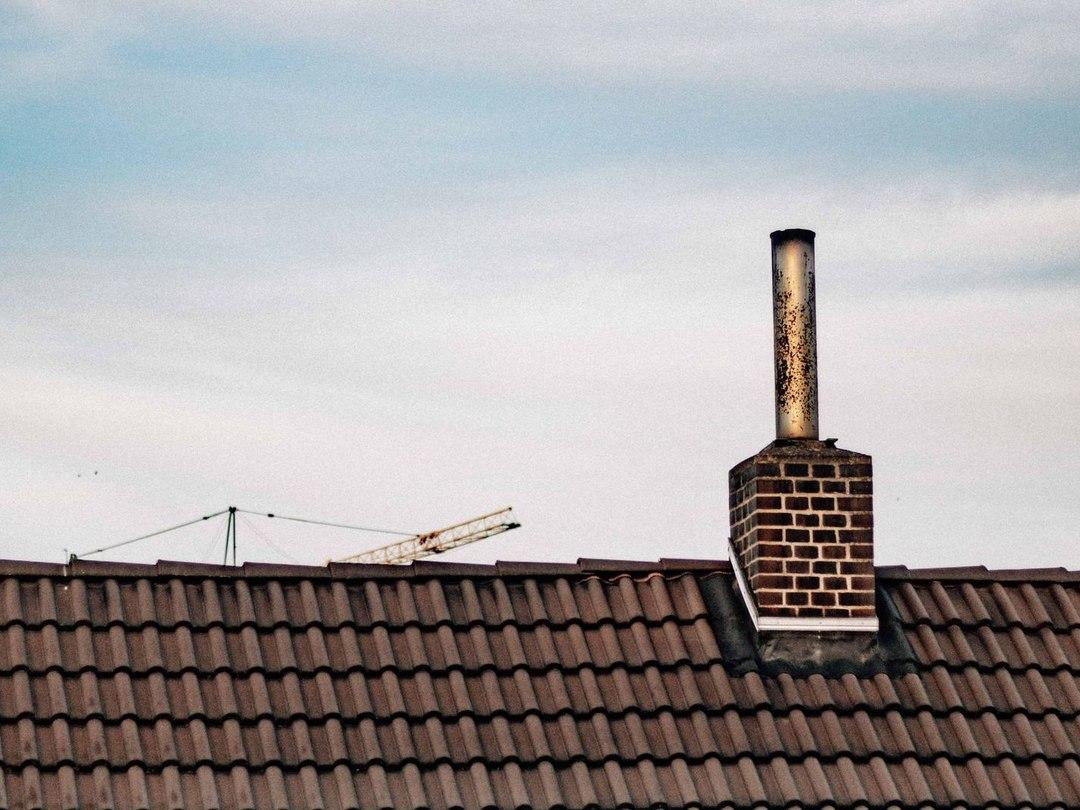
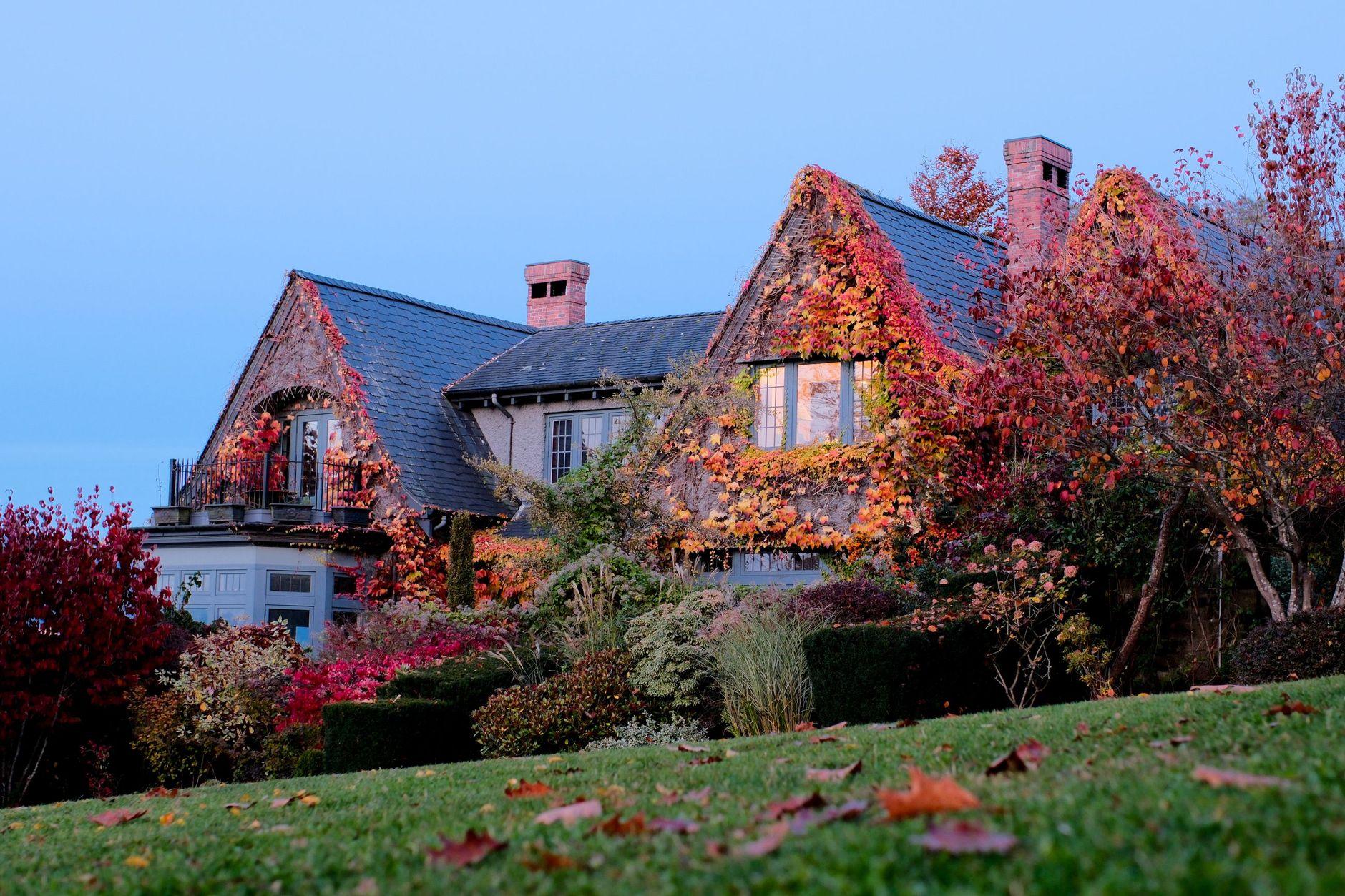
Four tops, four different jobs
Homeowners in Pico Rivera ask us to compare chimney tops more than almost anything else. The question usually arrives in spring, when someone has noticed a bird going in and out of the flue, or in late summer, when the news starts talking about red flag days. The options look alike from the street. They are not alike in what they stop.
Here is how the four main types compare, judged the way we judge every job at Winthrop Chimney Works: what happens on a dry, windy night with embers in the air.
Option one: a hood with no mesh
A plain hood is a flat or peaked lid on short legs. It keeps rain from falling straight down the flue and it stops leaves from piling on the damper. That is all it does.
On the ember side it does nothing. Burning flakes from your own fire go straight out the open sides, and wind-blown embers from a brush fire go straight in. Birds and rats get in too. We do not recommend a hood without mesh on any chimney that serves a wood fire, and we rarely fit one.
Option two: a single-flue cap with mesh
This is the standard spark arrestor: a stainless hood on a mesh cage that clamps to one flue tile. It is the job we do most often, and for a single flue it closes the top of the chimney the right way.
What it stops: rain, birds, animals, leaves, outgoing sparks, incoming embers. What it does not do: protect the crown, which stays bare around the tile. If the crown is sound that is fine. If the crown is cracked, water still gets into the masonry around the flue.
Price: the simplest job we quote, on an ordinary single-storey roof.
Option three: a wide cover over the whole top
When a chimney carries two or three flues, perhaps a fireplace on each side of the house and an old furnace vent, single caps on each tile get crowded and some tiles are too short to clamp. A wide cover sits over the whole top and has mesh all the way round the sides.
What it adds: every flue is screened at once, and the crown sits under a roof of its own, so rain no longer soaks into it. On older brick with a worn top this is often the smarter money, because it slows the damage that leads to a crown repair.
Price: costs more, because the cover is usually built to the measured outline of the chimney, and wide stacks often sit on steeper or taller roofs.
Option four: a cap with a sealing damper at the top
Some homes have a damper at the throat of the fireplace that no longer closes, or never sealed well. A top-mounted damper is a lid at the top of the flue, worked by a handle in the firebox, with a mesh cap built around it. Closed, it keeps warm or cool house air in and keeps embers out even if the mesh is damaged. Open, it works like a normal spark arrestor.
What to weigh: it is more parts on the roof and costs more than a plain mesh cap. It suits a fireplace used now and then, where the old throat damper is rusted. We price it after looking at the flue and the old damper together.
A side-by-side summary
- Hood only: stops rain. Does not stop sparks, embers or animals.
- Mesh cap, one flue: stops sparks, embers, animals and rain down the flue. Lowest cost of the screened options.
- Wide cover: all of the above for every flue, plus shelter for the crown. Higher cost.
- Mesh cap with top damper: all of the mesh cap's protection, plus a seal when the fireplace is not in use. Higher cost, more moving parts.
What decides which one your chimney gets
Four things settle it. How many flues come out of the top. Whether the tiles stand high enough to grip. What shape the crown is in. And what the fireplace burns: wood, gas logs or a sealed gas insert with its own liner.
Gas appliances follow their own rules. A sealed gas unit exhausts through a termination its maker tested with the appliance, and we fit that part, not a generic mesh cap. A gas log set burning in an old masonry flue still needs a screened cap, and the damper stays open whenever the logs are lit.
Ask us which top suits your chimney. Tell us how many flue pipes you can see on top, what you burn and roughly how old the house is, and we will explain the choice when we call.
Rules and fire zones
Some parts of California require a spark arrestor on any chimney that serves a wood or solid fuel fire, and the requirement is tighter in mapped fire hazard areas. Rules differ by city and change over time, so we check what applies to your address before we quote, and we never fit a top that would leave you short of it.
Separately, the South Coast air district, which covers Pico Rivera, can declare winter days when burning wood indoors is not allowed. That rule is about smoke, not sparks, but it shapes when your fireplace gets used and so when a sweep and a cap check make sense.
What happens after you choose
We confirm the choice in writing with the price before any work, fit it, and send photos of the finished top. If the crown or flashing needs attention, it goes on a separate line so the cap is never held up by a bigger decision.
Keep reading:
Not sure which of the four you have up there right now? Use our contact page and we will come and look before the fire weather settles in.
Get Your Chimney Ready for Fire Season
Winthrop Chimney Works checks the cap screen, the crown and the flue on your house and writes up what it finds, with photos and prices. Our days start in Pico Rivera and run through Montebello, Whittier, Lakewood and the rest of our list.